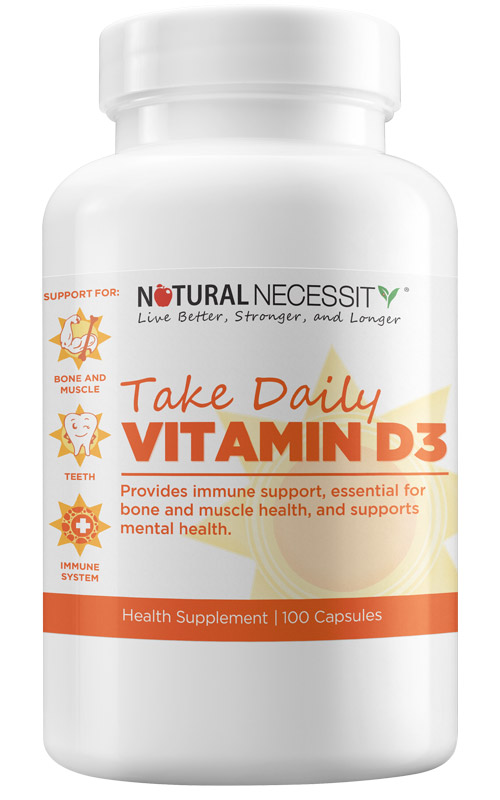
VITAMIN D3
Vitamin D3, or the sunshine vitamin, helps regulate and control the metabolism of calcium and phosphorus by aiding the absorption of these two minerals in the small intestine, and by directly affecting the way in which these minerals support bone health.
Vitamin D3, or the sunshine vitamin, helps regulate and control the metabolism of calcium and phosphorus by aiding the absorption of these two minerals in the small intestine, and by directly affecting the way in which these minerals support bone health. Vitamin D deficiency has been associated with muscle and bone weakness in both adults and children. Additionally, Vitamin D possesses immune properties such as augmenting macrophage function and the inhibition of inflammatory cytokines such as TNF alpha and interleukins.1,2 Vitamin D receptors are present in tissues involved in calcium homeostasis and also in tissues associated with immunomodulation.1
1. Holick MF, Chen TC, Lu Z, et al. Vitamin D and skin physiology: a D-lightful story. J Bone Miner Res 2007;22:V28-33.
2. Haroon M, FitzGerald, O. Vitamin and its emerging role immunopathology. Clin Rheumatol 2012;31:199–202.
|
| Daily Use
|
| Children Under 16 | Contact Natural Necessity |
| Adult Daily Use | Suggested Use: Take one (1) capsule as a dietary supplement, or as directed by a qualified health care professional.
Uso Sugerido: Tomar una (1) capsula diarias como suplemento nutricional o segun indicacion medica. |
Serving Size: 1 Capsules
//
Capsules Per Bottle: 100
| Ingredient
| Amount per Serving
|
| Vitamin D (as cholecalciferol) | 1000 IU |